
Testing
To test the Thermaltake DuOrb CPU cooler, we let the system idle for 30 minutes to capture the idle temperature. Then using SiSoftware Sandra we ran all four cores at 100% for 60 minutes to get the load temperature. Now we’re going through a bit of a heat wave in the city, which means my office was at an ambient temperature of 28°C. This will of course skew results higher then normal, but it’ll also provide a decent challenge to our review cooler.
For comparison sake we ran the tests on both the DuOrb and the last cooler I reviewed, which was the Cooler Master Hyper 212. For thermal compound, I used Gelid’s GC1 High Performance Thermal Compound, letting it set for 24 hours prior to benchmarking.
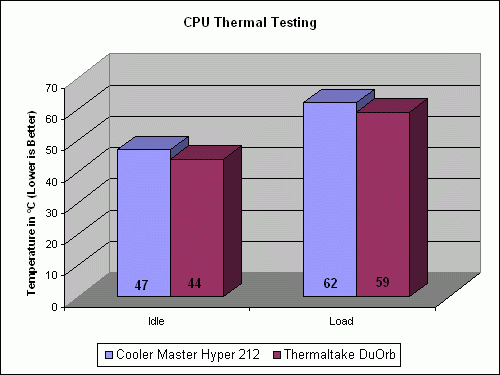
The first thermal test I decided to run was the CPU, being that this is a CPU cooler. The Thermaltake DuOrb beat out the Cooler Master cooler by 3°C at idle. When measuring load temperatures, the results scaled linearly as there was a 3°C difference between the coolers once again. This isn’t the greatest of performance differences, but it’s decent for a stock clocked quad core Phenom CPU. That being said, these differences would disappear once the processor was overclocked. However with the DuOrb, CPU cooling isn’t the end of the story.
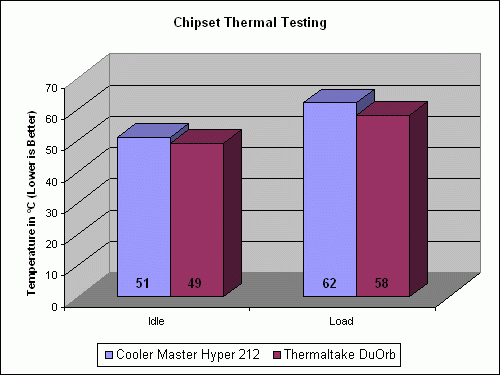
With a cooler like the DuOrb, and Thermaltake claiming that it may aide in cooling of incidental components like the chipset and VRM, we just have to do further testing. Well it turns out that the Thermaltake DuOrb did aide in cooling the chipset under both idle and load. The DuOrb posted a 2°C improvement at idle, and a 4°C difference under load. This was the only incidental component affected that I could measure. There was no effect on the RAM, VRM, or the back on the video card.
The final set of tests performed on the DuOrb were to poke and prob at its acoustics and to see if the dual 80mm fans added any additional noise to our test rig. Here’s what we came up with:
- Left Panel (Window): 47.2 dBA
- Right Panel: 46.8 dBA
- Rear: 48.8 dBA
If these numbers look familiar, they should. These are the exact same results posted in our review of the NZXT Tempest midtower case. For those who still haven’t caught on, that means that the Thermaltake DuOrb CPU cooler is quiet enough that it didn’t affect the acoustic profile of our test system one iota. I spun up our CPU tests once again, and the dB Meter didn’t even flinch while the processor was under load. Overall I would say this is good cooler when it comes to thermals and acoustics. Now let’s sum it all up and get the heck out of Dodge.
Real-Time Price and Stock Check – Check More Products and Pricing