
A Few More Words On Gaming Glory
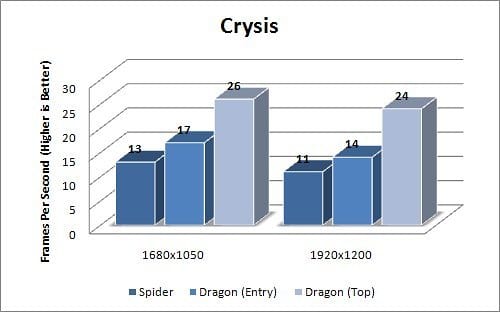
Crysis was a little different from 3DMark, especially in the way we tested. Since this isn’t a video card review, I used the Processor based demo to test out the game. This demo of course still relies on the video card for most of the rendering, but it places you in an environment with a lot of destructible objects. It’s fun to watch as the NPC in the demo blows up building after building, and there’s physics objects flying everywhere. It also provides a great test to find out how the CPU impacts performance. With that in mind, it’s rather awesome to see the triple core CPU pull ahead of the previous generation quad core CPU. Unfortunately you still need a high end video card (or set of video cards) to run Crysis with everything cranked up like in our benchmarks.
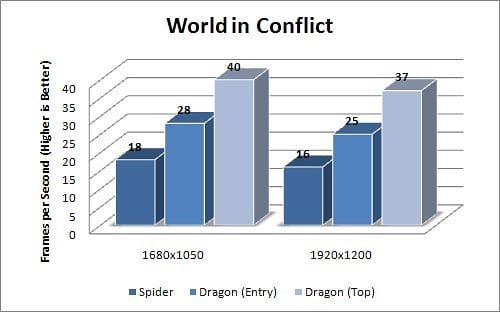
World in Conflict is an RTS game that compares nicely with Crysis for computer pounding performance. It of course has the added feature of being an RTS title, which means it needs to use the processor to computer all sorts of NPC movement. Once again this makes it rather surprising that the triple core is pulling ahead of the previous generation quad core in terms of performance, and of course, nowhere near the performance of the current Phenon II X4 955. This is with all details cranked to maximum.
The Intel Side of the Equation
So how does this all compare to the big blue giant and the products they’ve released. Well if the rest of the review sites out there are to be believed, the Phenom II is still playing second fiddle to Intel’s Core i7. Actually, you can believe that because Core i7 really is a bit of a “Smackover” on AMD in terms of the race for performance…for now. That being said, the performance is on par with the processors found in the Core 2 Quad family. I wouldn’t count out AMD just yet on this information though. Remember that their products are much cheaper then Intel’s latest and greatest, and thought you may get 95% of the performance, you’re only paying 90% of the price. With the uncertainty of the economy, this is definitely something that computer enthusiasts cannot ignore.
Speaking of enthusiasts, AMD has launched Black Editions with every processor refresh, thus adding more value to their parts. This allows additional performance gains from these processors if one chooses to overclock. AMD makes this easy by providing easy to use software to make this so, though I’m sure seasoned veterans will want to jump straight into the BIOS screens.
Final Thoughts and Conclusion
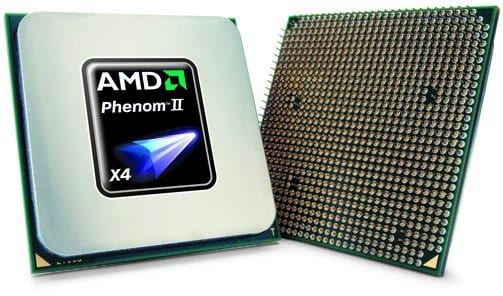
AMD has definitely managed to put together a great package in their Dragon reloaded and even their original Dragon platform. This latest performance platform is flexible enough to give you plenty of choice over components and configurations. Hold on to your DDR2 if you need to and upgrade to DDR3 when you’re ready. It’s also watchful enough to give you lots of utilities and tools to further tweak you gaming and entertainment needs. This is also assisted by highly overclockable parts like the Black Edition CPUs.
In the end, I would have to give props to the entry-level Dragon package. It’s a great marriage of components and outputs, and gives you plenty of expansion room to move from onboard video to CrossfireX. I’m not saying that you couldn’t build a budget system with some of the components from the top-end system. It’s a flexible platform after all. It’s just that the the entry-level configuration gives you a lot of room for upgrading. Either way I have to say bravo to AMD for having a clear cut definition of their platforms and for showing noteworthy gains from one platform to another. It isn’t all BS. Now all they need to do is come to par with Intel in terms of performance and then the processor wars will become very interesting again.
Discuss This Article in the Futurelooks Community Forums